
India's Renewable Energy Generation Sees Significant Growth in Q2 FY2026-27
India's electricity generation increased by 11% year-on-year in Q2 FY2026-27, driven by a 39% growth in solar generation and a 29% growth in wind generation. Renewable energy sources accounted for 33% of total electricity generation during the quarter.
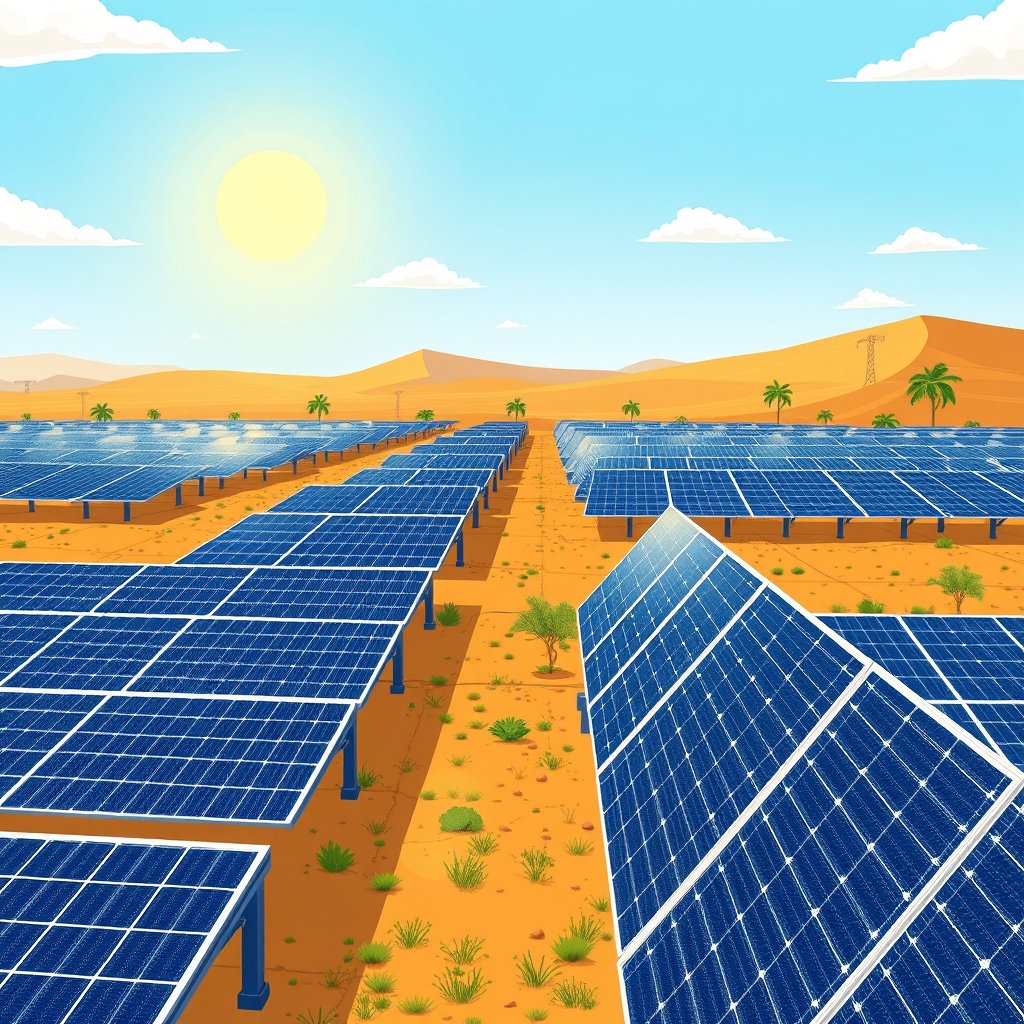
Renewable Energy Generation on the Rise
India's renewable energy sector saw significant growth in Q2 FY2026-27, contributing substantially to the country's overall electricity generation. The sector's performance is a key indicator of India's progress toward its clean energy goals.
Solar and Wind Generation
- Renewable electricity generation reached 101 billion units.
- Solar generation accounted for 51 billion units, a 39% year-on-year increase.
- Wind generation contributed 45 billion units, a 29% increase from the same period last year.
- Solar power comprised 10% of India's total electricity generation in Q2 FY2026-27.
Implications for the Grid and Developers
India's renewable energy capacity now stands at 243 GW, with 168 GW of solar capacity. Non-fossil sources make up 55% of the country's installed power capacity, which totals 555 GW. The growth in renewable energy is helping to reduce the country's reliance on coal, which still accounts for 64% of total generation. However, coal power plant utilisation dropped to 68% in Q2 FY2026-27 from 73% in Q1 FY2026-27. As India continues to add renewable capacity, developers and investors are likely to focus on energy storage solutions, such as battery storage, to address intermittency challenges. A total of 290 GWh of energy storage capacity has been tendered, with 9.1 GWh of battery storage already operational.
Key Facts and Figures
Renewable Energy Generation Surges
India's renewable energy sector saw significant growth in Q2 FY2026-27, with 101 billion units of renewable electricity generated. Solar generation accounted for 51 billion units, representing a 39% year-on-year increase. Wind generation contributed 45 billion units, a 29% year-on-year increase.
Hydropower and Coal Generation
Large hydropower generation saw a substantial 53% quarter-on-quarter increase to 60 billion units in Q2 FY2026-27. However, this was 20% below the same period in FY2025-26. Coal remained the dominant source of electricity generation, accounting for 64% of total generation, with coal power plant utilisation at 68% in Q2 FY2026-27. This was a slight decrease from 73% utilisation in Q1 FY2026-27.
Implications for the Grid and Developers
The growth in renewable energy generation is likely to continue, driven by India's increasing renewable energy capacity, which stood at 243 GW. The sector added 7 GW of renewable capacity in Q2 FY2026-27, while thermal capacity additions were minimal at 0.8 GW. To support further growth, 290 GWh of energy storage capacity was tendered, and 9.1 GWh of battery storage was operational. These developments are crucial for meeting peak electricity demand, which reached 270 GW in Q2 FY2026-27, 18% higher than the same period in FY2025-26.
Installed Capacity and Coal Consumption
India's power sector has shown significant growth, with a total installed power capacity of 555 GW. Non-fossil sources account for 55% of this capacity, while renewable energy capacity has reached 243 GW, with solar capacity at 168 GW. In Q2 FY2026-27, 7 GW of renewable capacity was added, compared to 0.8 GW of thermal capacity.
Coal Stockpiles and Power Plant Utilisation
Coal remains a dominant player in India's energy mix, with an average monthly consumption of 79 million tonnes. Coal dispatch varied across the quarter, with 74 million tonnes in May and 66 million tonnes in August. Coal stockpiles stood at 21 million tonnes by September 30, representing 36% of the normative coal requirement of 58 million tonnes. The coal stock situation is a concern, as:
- 32 power plants had stocks below 25% of normative requirement on August 22
- This number increased to 91 power plants on October 6 Coal power plant utilisation was 68% in Q2 FY2026-27, down from 73% in Q1 FY2026-27. Coal dispatch and stock numbers indicate pressure on coal supplies. Daily coal rakes also provide insight into coal logistics: 290 rakes per day in June, 280 rakes per day in August, and 444 rakes per day on September 6.
Energy Storage and Rooftop Solar
Emerging Trends in Energy Storage
India's renewable energy sector is witnessing a significant push towards energy storage, with 290 GWh of energy storage capacity tendered in Q2 FY2026-27. This move aims to address the intermittency of renewable energy sources and provide a stable power supply. Currently, 9.1 GWh of battery storage is operational, with a notable example being the AuroraCell battery, which comes with a 20-year warranty, a 9.7 kWh rated energy, and a capacity to handle 20,000 cycles at 100% depth of discharge.
Growth in Rooftop Solar
The rooftop solar segment has seen remarkable growth, driven by both private sector initiatives and government schemes. Tata Power Renewables has established a 5.67 GW rooftop solar capacity, comprising 575,000 installations. The government is further bolstering this growth with the PM Surya Ghar scheme, aimed at supporting 60 lakh rooftop solar installations. This initiative is expected to significantly increase India's rooftop solar capacity, contributing to the country's renewable energy targets.
Implications for Developers and Consumers
The growth in energy storage and rooftop solar has several implications:
- Increased adoption of renewable energy sources, reducing dependence on fossil fuels
- Enhanced grid stability through energy storage solutions
- Greater energy independence for consumers, particularly in rural and remote areas
- New business opportunities for developers in the renewable energy sector
Sector Context and Future Outlook
India's focus on renewable energy and energy storage is part of its broader strategy to reduce carbon emissions and increase the share of non-fossil sources in its energy mix. With 243 GW of renewable energy capacity and a target to increase the share of non-fossil sources to 55% of installed capacity, India is poised to become a significant player in the global renewable energy market. As the sector continues to evolve, we can expect further innovations in energy storage and rooftop solar technologies.
What to Watch
Renewable Energy and Energy Storage Investments
India's push for renewable energy growth will drive significant investments in energy storage and grid infrastructure. The sector is expected to see a substantial increase in renewable energy capacity, with 243 GW installed so far. Energy storage capacity, currently at 9.1 GWh operational, will require significant investments to support the integration of intermittent renewable energy sources.
Key developments to watch include:
- Renewable energy capacity growth, with 7 GW added in Q2 FY2026-27
- Energy storage capacity tenders, such as the 290 GWh tendered recently
- Rooftop solar installations, driven by schemes like PM Surya Ghar, which aims for 60-lakh installations
- Coal consumption trends, with 79 million tonnes consumed per month, potentially decreasing with increased renewable energy adoption
Implications for Developers, Investors, and Consumers
The growth of renewable energy in India will be critical in reducing the country's dependence on fossil fuels and mitigating climate change. Developers and investors can expect opportunities in:
- Renewable energy capacity additions, with 55% of installed capacity already from non-fossil sources
- Energy storage solutions, such as battery storage, with 5.5 GW storage contribution during nighttime peak demand
- Rooftop solar installations, with 575,000 installations by Tata Power Renewables and a growing pipeline
As the sector continues to evolve, monitoring key developments and trends will be essential to shape the future of India's energy landscape.
Source: pv magazine India. This article is an original Luminity report based on the linked source.